
Generic CC2538-CC2592-DK Board
Support for the 3rd party CC2538-CC2592-DK board
Support for the 3rd party CC2538-CC2592-DK board
Overview
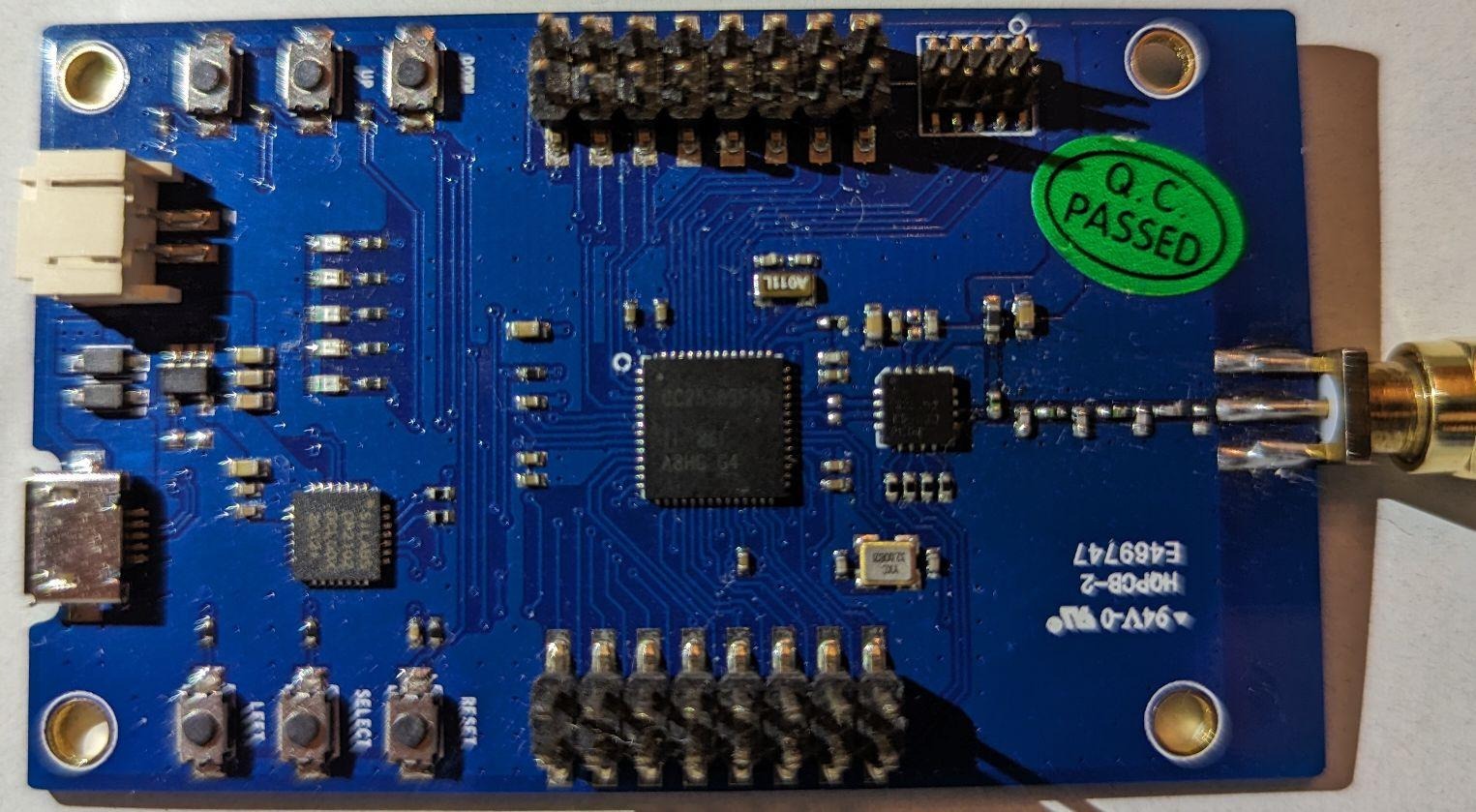
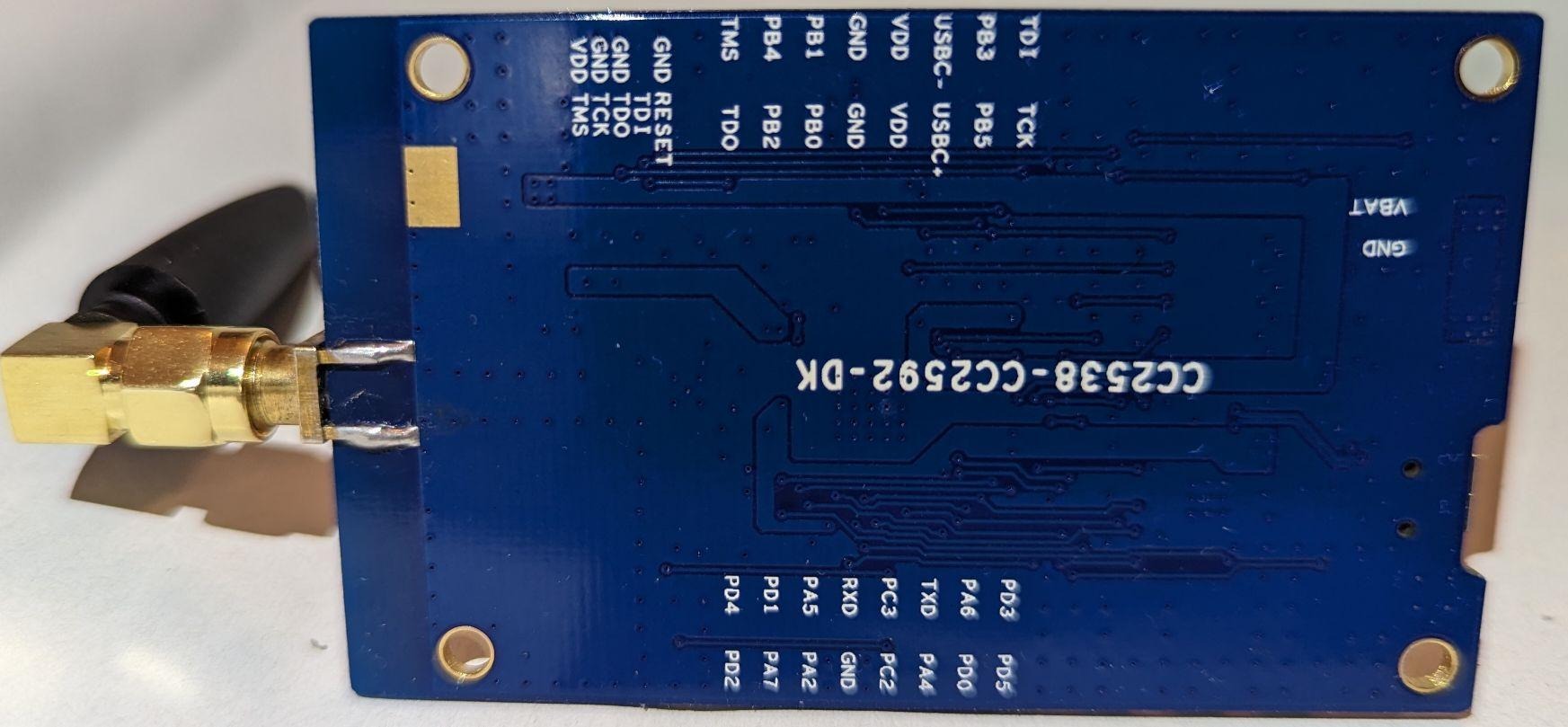
The generic CC2538-CC2592-DK board can obtained from various vendors in the typical online shops. There are currently few options for readily available and affordable boards featuring a legacy CC2538 MCU; this is one of them.
The boards seem to be based on the schematics provided by
@knowic via the CC2538_CC2592_DK repo.
Hardware
| MCU | CC2538SF53 |
|---|---|
| Family | ARM Cortex-M3 |
| Vendor | Texas Instruments |
| RAM | 32 KiB |
| Flash | 512 KiB |
| Frequency | 32 MHz |
| FPU | no |
| Timers | 4 |
| ADCs | 1x 12-bit (8 channels) |
| UARTs | 2 |
| SPIs | 2 |
| I2Cs | 1 |
| Vcc | 3.6 V - 5 V (MCU powered @ 3.3 V via LDO) |
| Schematics | Board Schematics |
Schematics
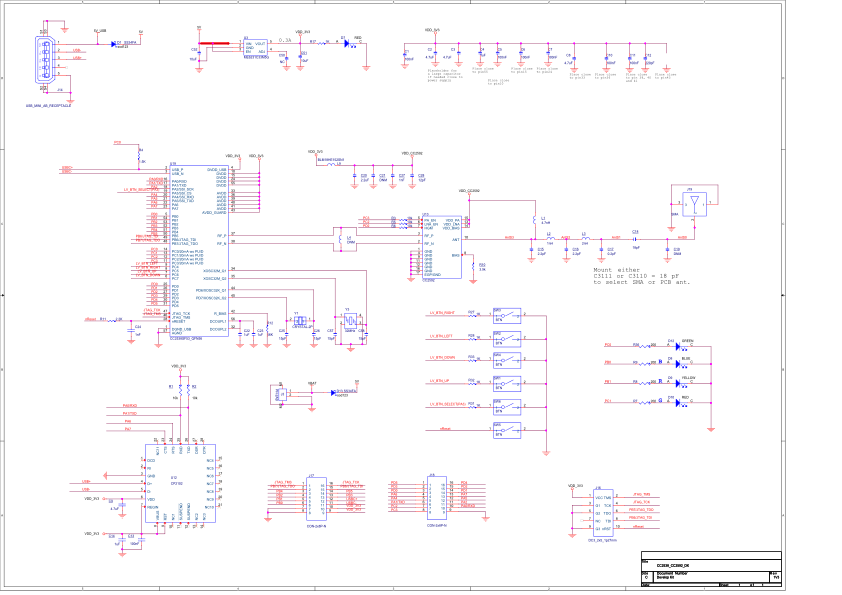
Download schematics from author’s repo.
Flashing
Prior to flashing the bootloader needs to be entered. For this, hold the “SELECT” button, press the “RESET” button, then release the “SELECT” button. Now run
BOARD=generic-cc2538-cc2592-dk make flashNote: Flashing via J-Link would also be possible by passing
PROGRAMMER=jlink, but requires attaching a J-Link programmer/debugger.
Accessing the terminal
The board features an CP2102 USB to UART bridge that is used for stdio by default. Just use
BOARD=generic-cc2538-cc2592-dk make termDebugging
Assuming an J-Link (e.g. the J-Link EDU Mini) debugger is connected, debugging is as simple as:
BOARD=generic-cc2538-cc2592-dk make debugNote: By default OpenOCD is used for debugging. While debugging works fine
with OpenOCD, flashing is only supported via the bootloader or jlink.